
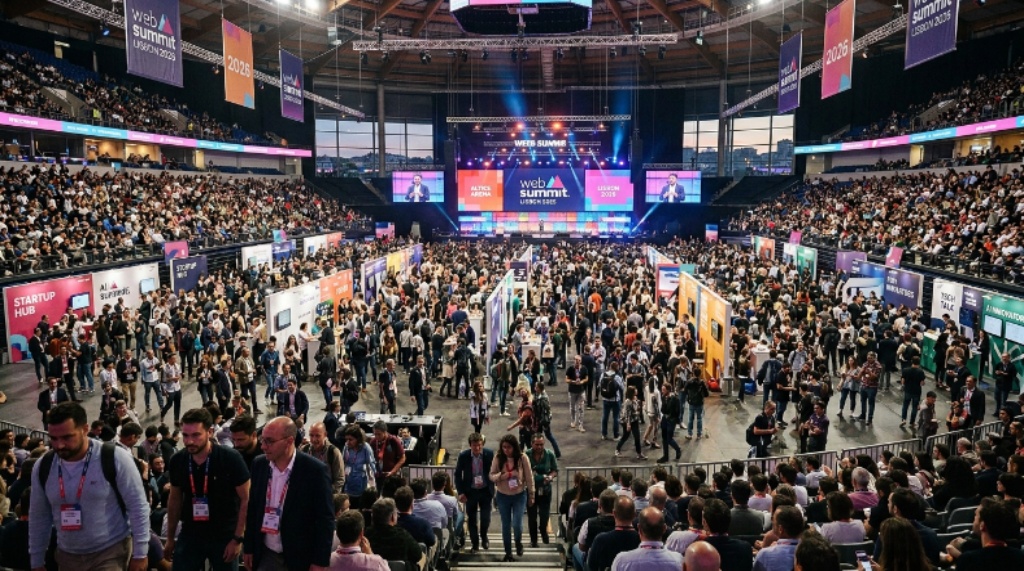
Web Summit Lisbon 2026 is shaping up to be one of the most important gatherings in the global tech calendar. Scheduled for November 9–12, 2026, the event will bring together over 70,000 attendees from more than 160 countries. Founders, investors, policymakers, and enterprise leaders will all share the same floor at the Altice Arena and FIL exhibition centre in Lisbon, Portugal.
This year, the conversations feel different. The stakes are higher. The topics are more urgent. From artificial intelligence governance to the future of money, the themes arriving at Web Summit 2026 reflect a world that is changing faster than most of us can track.
So, what are the biggest tech conversations heading to Lisbon this November? Let us walk through them.
Artificial Intelligence Moves from Hype to Accountability
Artificial intelligence is no longer a newcomer at tech conferences. However, the tone of discussion is shifting in a meaningful way. In previous years, the conversation centred on what AI could do. Now, it centres on what AI should do — and who gets to decide.
At Web Summit 2026, expect deep discussions around AI governance, accountability frameworks, and the real-world impact of autonomous systems. The EU AI Act is now in its active implementation phase. This means companies operating in Europe must comply with risk-based regulations covering how they build and deploy AI tools.
Additionally, large enterprise adoption is accelerating. According to KPMG’s 2026 Global Tech Report, 88 percent of organisations are already embedding AI agents into their workflows, products, and value streams. That number is striking. Therefore, conversations around return on investment, responsible deployment, and workforce transformation will be front and centre in Lisbon.
The debate is no longer just for researchers or regulators. It belongs to every founder, investor, and operator in the room.
The Rise of Physical AI and Autonomous Systems
One of the most exciting themes emerging from Gartner’s 2026 strategic technology trends is “Physical AI.” This refers to artificial intelligence that operates in the real world — through robots, drones, autonomous vehicles, and smart equipment.
This is a conversation Web Summit is well-positioned to host. The event draws attendees from deep tech, hardware startups, and enterprise infrastructure alike. Physical AI sits at the intersection of all three.
Furthermore, the implications go beyond the factory floor. Autonomous systems are already being used in logistics, agriculture, healthcare, and defence. However, their deployment raises questions around safety, liability, and regulation. These are exactly the kinds of cross-sector conversations that thrive at a conference as broad as Web Summit.
Expect panel sessions and fireside chats exploring how AI is moving out of the cloud and into the physical world — and what that means for industries that have not changed much in decades.
Cybersecurity in the Age of AI-Powered Threats
Cybersecurity is a permanent fixture at major tech events. However, in 2026, it carries new urgency. Cyber threats are not just growing in volume. They are growing in sophistication, driven in part by the same AI tools that companies are trying to use for good.
Gartner identifies “Preemptive Cybersecurity” as one of its top strategic technology trends for 2026. The shift is from reactive defence to anticipatory protection. Companies are no longer waiting for attacks to happen. They are building systems that can identify and neutralise threats before they cause damage.
Additionally, “Digital Provenance” — the ability to verify the origin and integrity of software, data, and AI-generated content — is becoming a critical concern. As deepfakes and synthetic media become more convincing, trust in digital information is eroding. This is a problem that affects governments, media companies, and everyday users alike.
At Web Summit Lisbon 2026, cybersecurity sessions will likely address how organisations can stay ahead of increasingly intelligent adversaries. Startups offering AI-native security solutions will have a strong presence on the exhibition floor.
Fintech’s Next Chapter: From Innovation to Resilience
Financial technology has matured. The question is no longer whether fintech can disrupt traditional banking. It already has. The question now is whether fintech companies can build sustainable, compliant, and resilient businesses for the long term.
According to industry analysis, biometric authentication is now used in 70 percent of fintech logins globally. Cybersecurity has become the number one spending category for fintechs. Meanwhile, autonomous decision systems are handling risk scoring, fraud detection, and credit decisioning at scale.
However, resilience requires more than good technology. It requires navigating a complex and growing regulatory environment. Open banking mandates, stablecoin regulation, and ESG-linked financial products are all reshaping how fintech companies operate.
Web Summit has long been a gathering place for fintech founders, investors, and regulators. Therefore, this year’s edition will likely host frank conversations about what it takes to build a fintech company that lasts — not just one that grows fast.
Tokenised assets and embedded finance will also draw significant attention, as the line between technology platforms and financial services continues to blur.
Climate Tech and the Pressure to Deliver
Climate technology has moved from the margins of tech conferences to the main stage. At Web Summit Lisbon 2026, sustainability and future tech will be a major track. However, the mood has shifted. Early enthusiasm has given way to a harder question: is climate tech actually delivering results?
Investors who poured money into climate startups over the past five years are now asking for proof points. The pressure to move from pilot projects to scalable, revenue-generating solutions is intense. Additionally, climate-risk modelling is being integrated into financial products, underwriting processes, and portfolio management. This means climate tech is no longer just an environmental story. It is a financial one too.
Conversations in Lisbon will likely explore how startups can close the gap between ambition and execution. Topics such as green energy infrastructure, carbon markets, sustainable agriculture technology, and climate data platforms are all expected to feature prominently.
Europe, and Portugal in particular, has strong momentum in the climate tech space. That context makes Lisbon an especially fitting host for these conversations.
The Future of Work in an AI-Augmented World
The question of how AI is changing work has become one of the defining debates of our time. Web Summit 2026 will not shy away from it.
According to KPMG’s analysis, high-performing organisations expect roughly half of their tech teams to be permanent human staff by 2027. The rest of the work will be handled by AI agents and augmented systems. That is a profound shift. Therefore, conversations about skills, retraining, workforce structure, and the human-AI relationship will carry real emotional weight in Lisbon.
Additionally, hybrid and distributed work models continue to evolve. Tools from enterprise software companies are integrating AI assistants, automated workflows, and real-time collaboration features at a pace that is hard to keep up with. Founders building in this space will have plenty of opportunities to showcase their work at the startup exhibition.
However, the conversation is also personal. Many of the 70,000 people in that arena will be wondering what their own careers look like in five years. That makes this topic uniquely resonant.
Digital Regulation and the Global Policy Debate
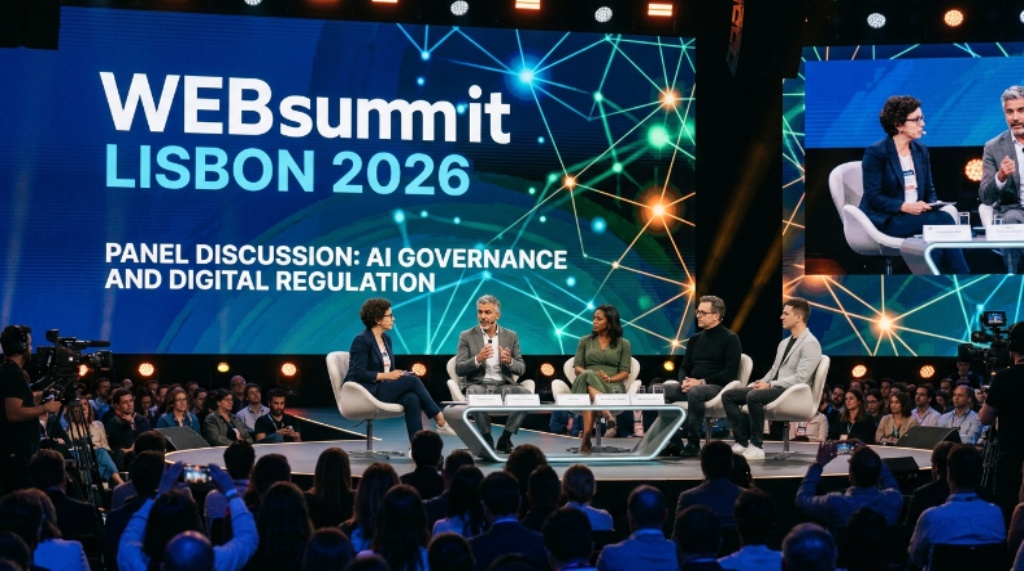
One of Web Summit’s most distinctive qualities is that it brings together people who do not always sit in the same room — technologists, regulators, policymakers, and civil society leaders. In 2026, that mix is more important than ever.
The EU AI Act is one of the most significant pieces of technology legislation in history. Its implementation will shape how AI products are built and deployed across Europe and beyond. However, it is not the only regulatory story unfolding. Data governance, competition policy, platform regulation, and digital identity frameworks are all being actively debated in capitals around the world.
Sessions on digital regulation have been a regular feature of Web Summit for years. In 2026, expect those conversations to be sharper and more urgent. Founders and investors need to understand the regulatory landscape. Policymakers need to understand what is actually being built. Web Summit is one of the few places where that mutual education happens at scale.
Additionally, geopolitical tensions around technology — particularly between the US and China — will provide a backdrop to many of these discussions.
Startups, Venture Capital, and the Funding Landscape
No Web Summit conversation is complete without talking about money. The event draws over 1,200 investors and more than 2,000 startups. Deal-making is woven into its DNA.
In 2026, the funding environment is more selective than it was during the boom years. Investors are prioritising profitability, defensibility, and clear paths to scale. However, capital is still flowing — particularly into AI, climate tech, cybersecurity, and fintech.
New VC techniques, mega funding deals, and the evolving European startup ecosystem will all be discussed at dedicated investor tracks. Additionally, the Web Summit app-driven meeting scheduler allows founders and investors to pre-book conversations before the event even begins. For many attendees, those one-on-one meetings represent the single highest-value activity of the entire week.
Therefore, whether you are a seed-stage founder or a late-stage growth company, understanding the current VC mindset before arriving in Lisbon could be the difference between a productive week and a missed opportunity.
Conclusion
Web Summit Lisbon 2026 arrives at a pivotal moment. The technology sector is no longer simply about building exciting new products. It is about accountability, regulation, resilience, and the broader impact on society and the planet.
The biggest conversations heading to Lisbon this November touch on artificial intelligence governance, physical AI and autonomous systems, cybersecurity in an AI-driven threat landscape, fintech’s push toward resilience, climate tech’s pressure to deliver results, the future of work, global digital regulation, and the state of startup funding.
Together, these themes paint a picture of an industry in transition. The energy at Web Summit is always electric. However, in 2026, there is something more serious underneath it. These are not just business conversations. They are conversations that will shape the next decade of technology — and the societies that depend on it.
If you are heading to Lisbon in November, come prepared to listen as much as you speak.
Frequently Asked Questions
When and where is Web Summit Lisbon 2026?
Web Summit 2026 takes place from November 9 to 12, 2026, at the Altice Arena and FIL exhibition centre in Lisbon, Portugal.
What are the main topics at Web Summit 2026?
The key themes include artificial intelligence, cybersecurity, fintech, climate technology, digital regulation, the future of work, and startup investment. The event covers the full breadth of the global technology industry.
How many people attend Web Summit each year?
Web Summit typically attracts over 70,000 attendees from more than 160 countries, including over 900 speakers, 2,000 startups, and 1,200 investors.
Is Web Summit good for startups?
Yes. Web Summit features a dedicated Startup Exhibition with over 2,000 companies, a startup pitch competition called PITCH, and an app-based meeting scheduler that allows founders to connect directly with investors, media, and enterprise buyers.
How can I stay updated on Web Summit 2026 news and speakers?
The official Web Summit website at websummit.com regularly publishes updates on speakers, schedules, and ticket availability. Subscribing to their newsletter is the most reliable way to receive announcements.
Tap to Open in Google Maps:
About the Author