
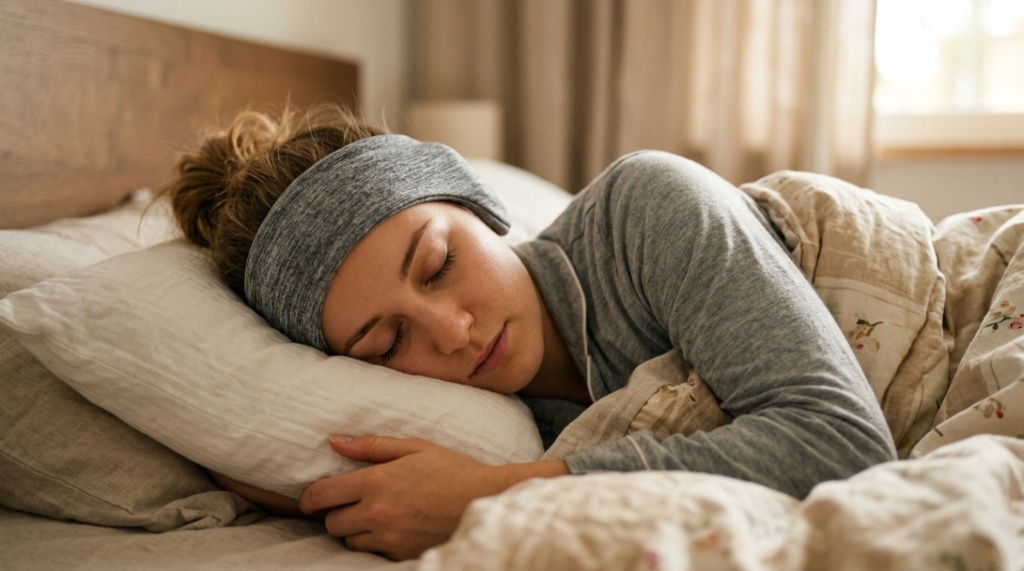
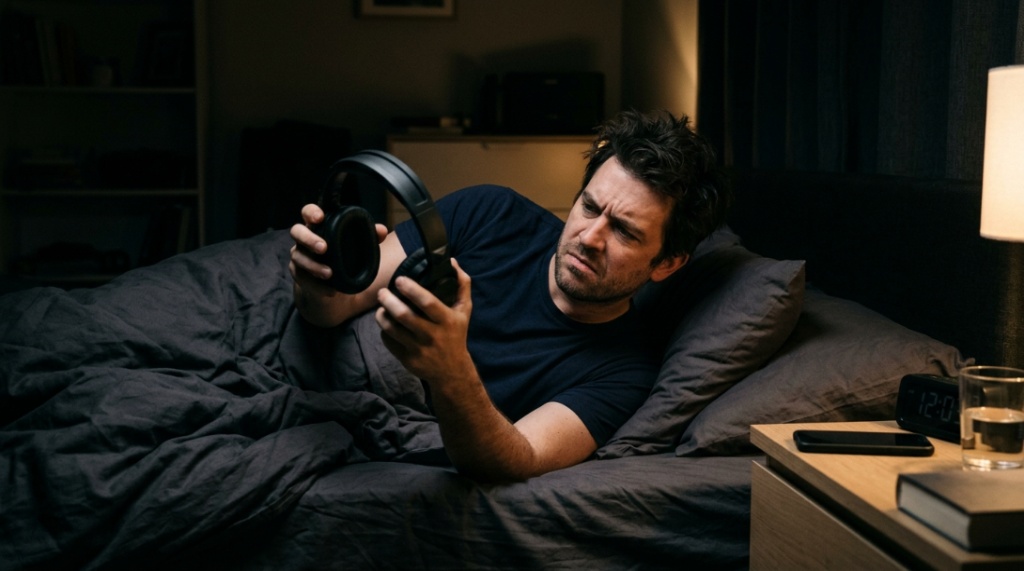
I have a drawer full of five “sleep headphones” that each lasted exactly one night before I ripped them off at 2 AM—one pressed a hard driver into my ear canal until it ached, another heated my head like a wool cap in summer, and three slid off before I even fell asleep. Each purchase felt reasonable based on product photos and reviews, yet each failed the only test that matters: staying comfortable enough to forget they exist for 7–8 hours of actual sleep. Comfortable sleep headphones are not just regular headphones worn to bed—they require fundamentally different design priorities than daytime listening because sleeping headphones must survive sustained pressure from a pillow, hours of skin contact without irritation, and the unconscious movements of someone who is not awake to adjust them. This guide identifies the specific comfort failures that plague sleep headphones and the design features that prevent each one.
Why Do Most Headphones Fail as Sleep Headphones?
Most headphones fail for sleep because they are designed for upright, awake use—their rigid housings create pressure points when pressed against a pillow, their padding traps heat during hours of skin contact, their cables tangle during unconscious movement, and their weight creates neck strain in side-sleeping positions that daytime use never encounters.
The five failure modes:
- Pressure point pain: Any rigid component (driver housing, control button, charging port) between your ear and pillow creates concentrated pressure that becomes painful within 30–60 minutes of side sleeping. This is the #1 complaint about sleep headphones.
- Heat buildup: Over-ear and thick in-ear designs trap body heat against the head/ear. After 2–3 hours, accumulated heat wakes you or causes sweating that makes the headphones slip.
- Displacement during movement: Average sleepers change position 10–20 times per night. Headphones that rely on ear hooks, headband tension, or friction fit dislodge during these unconscious movements.
- Cable tangles: Wired sleep headphones wrap around necks, arms, and pillows during sleep—creating choking hazards, discomfort, and damage to the cable connection.
- Ear canal pressure: Standard in-ear tips that feel fine for 30 minutes of daytime use create deep-ear aching after 4+ hours of sustained insertion during sleep. The ear canal was not designed for continuous obstruction.
What Design Features Make Sleep Headphones Actually Comfortable?
Genuinely comfortable sleep headphones share five design features: ultra-flat speaker profiles (under 6 mm thick), breathable fabric contact surfaces, wireless connectivity (no cables), secure-but-gentle retention that survives position changes, and soft flexible materials throughout with zero rigid pressure points anywhere in the design.
| Feature | Why It Matters for Sleep | What to Look For | Red Flags |
|---|---|---|---|
| Speaker thickness | Thinner = less pressure between ear and pillow | Under 6 mm total profile | Hard plastic housings, bulky drivers |
| Contact material | 8 hours of skin contact requires breathability | Moisture-wicking fabric, mesh, thin silicone | Synthetic leather, rubber, non-breathable foam |
| Connectivity | Cables tangle and create hazards during sleep | Bluetooth 5.0+ with 8+ hours of battery | Wired only, short battery life under 6 hours |
| Retention method | Must stay positioned through 10–20 position changes | Headband style, contoured fit, adjustable tension | Friction-only fit, loose earbuds, hook styles |
| Flexibility | Rigid components create pressure against the pillow. | Fully flexible construction, no hard edges | Hard plastic buttons, rigid charging ports, metal frames |
Which Sleep Headphone Styles Work for Each Sleep Position?
Side sleepers need the flattest possible profile (headband style or ultra-thin true wireless buds); back sleepers can use slightly thicker options (standard sleep buds or thin over-ear); and stomach sleepers need minimalist in-ear designs that do not contact the pillow at all—because sleep position determines which headphone surfaces experience pillow pressure.
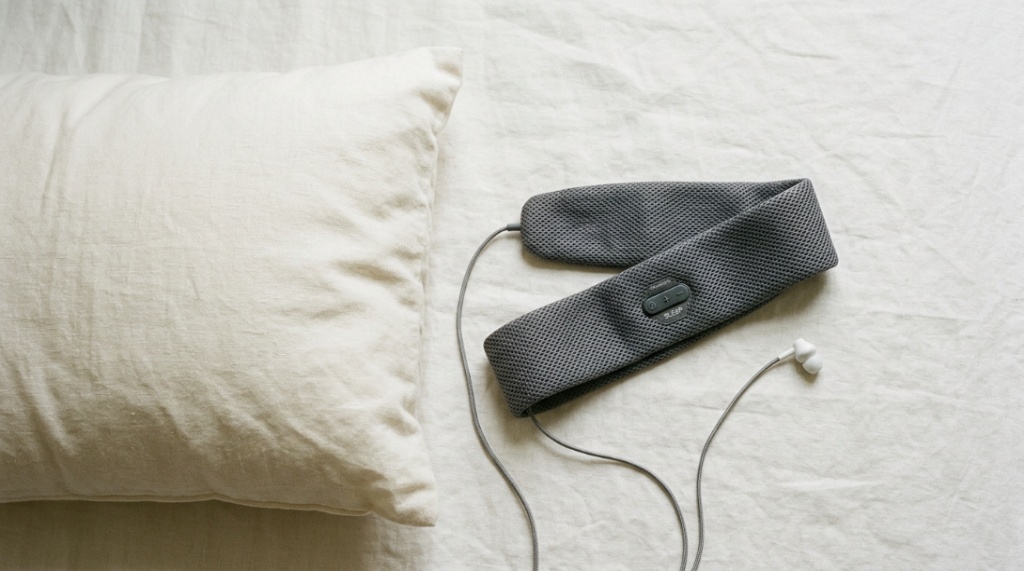
- Side sleepers (most demanding): Headband-style sleep headphones (thin speakers embedded in a soft fabric band) or ultra-flat true wireless buds (under 5 mm ear profile). Any protrusion beyond the ear surface contacts the pillow and creates pain. The headband approach works best because it distributes any pressure across the entire side of the head rather than concentrating it on the ear.
- Back sleepers (most options): Almost any sleep headphone style works because no pillow pressure contacts the ears. Standard sleep earbuds, thin over-ear designs, and headband styles all function. Choose based on sound quality preference and heat tolerance.
- Combination sleepers (side + back): Must choose designs that work for side sleeping (the more demanding position). Headband styles accommodate all positions. True wireless buds work if flat enough for side-sleeping moments.
- Stomach sleepers (minimal options): Only true wireless buds or bone-conduction headphones (no ear canal insertion) work because the face contacts the pillow. Anything with an external profile gets pushed uncomfortably into ears during face-down moments.
How Do You Test Sleep Headphone Comfort Before Committing?
Test sleep headphones by wearing them in your actual sleep position for 30 minutes while lying on your real pillow before bedtime—if any discomfort develops in 30 minutes, it will become intolerable by hour 3. Additionally, verify 8+ hour battery life by running them on a timer test during the day.
Comfort testing protocol:
- Pressure test (immediate): Lie in your primary sleep position with headphones on. Does any component press uncomfortably between ear and pillow? Can you feel a hard edge anywhere? If yes within 5 minutes, return immediately—it only gets worse.
- Heat test (30 minutes): Keep headphones on for 30 minutes in a sleeping position. Do your ears feel warm? Is the contact surface getting damp? Heat that is noticeable at 30 minutes becomes unbearable at 3 hours.
- Retention test (movement): Roll between positions 5–10 times. Do the headphones stay positioned? Does sound remain balanced between ears? Headphones that shift during conscious movement will completely displace during unconscious sleep movement.
- Battery test (timed): Start playback at normal sleep volume with a timer. How long until they die? Claimed battery life at “moderate volume” often means louder than sleep volume—real-world sleep use may exceed or fall short of claims depending on volume.
- Morning check: If they pass 30-minute testing, wear them for one actual full night. Morning assessment: any ear pain? Red marks on ears? Headphones still in position? Sound still playing? Finding the right audio gear can completely transform your bedtime routine, but physical comfort isn’t the only thing to keep in mind when using smart devices. Since many modern Bluetooth bands sync directly with mobile apps, ensuring your device settings are secure is equally vital. Just as you protect your physical comfort at night, you should also learn how to protect personal data online to keep your connected sleep apps secure from privacy leaks.
What Price Range Delivers Genuinely Comfortable Sleep Headphones?
$25–$60 delivers genuinely comfortable sleep headphones from brands that specialize in this specific use case—below $15 compromises materials and battery life, while above $80 adds audio quality improvements that matter less for sleep content (white noise, meditation, and ambient sounds) than for music listening.
- Under $15: Uncomfortable materials, poor battery (4–5 hours), no Bluetooth or basic Bluetooth with connection issues. Speakers are often too thick for side sleeping. Fabric quality causes itching or sweating.
- $15–$25: Entry comfort. Adequate headband designs with thin speakers, a 6–8 hour battery, and basic Bluetooth. May lack durability for nightly use beyond 3–6 months. Acceptable for testing whether sleep headphones work for you.
- $25–$45 (Sweet spot): Genuinely comfortable materials, 8–10+ hour battery, reliable Bluetooth 5.0, washable headbands, and quality speakers thin enough for side sleeping. Last 1–2 years of nightly use. Best value tier.
- $45–$80: Premium comfort with superior sound quality, longer battery, better build. Active noise cancellation in some models. Worth it for audiophiles who want better sound or those who need ANC for noisy environments.
- $80+: Bose Sleepbuds, specialized medical-grade options. Excellent comfort and features but diminishing returns on the comfort metric specifically. Better sound quality justifies cost for music listeners; white noise users get minimal benefit over $40 options.
For tested recommendations of sleep headphones evaluated specifically for overnight comfort, the best budget sleep headphones reviewed for comfort provide real-world comfort data from full-night testing across different sleep positions—identifying which options genuinely stay comfortable until morning versus those that fail by midnight.
Conclusion
Avoiding uncomfortable sleep headphones means understanding that sleep demands fundamentally different design priorities than daytime listening: ultra-flat profiles under 6mm for side sleeping, breathable contact materials for 8-hour skin contact, wireless connectivity to eliminate cable tangles, and zero rigid components anywhere in the design. The headband style dominates sleep comfort for side sleepers because it distributes pillow pressure across the entire head rather than concentrating it on the ear.
Test for 30 minutes in your actual sleep position before committing—any discomfort that appears at 30 minutes becomes intolerable by hour 3. Spend $25–$45 on a purpose-built sleep headphone rather than trying to make daytime earbuds work for sleep. Your ears, your sleep quality, and your morning mood will thank you for choosing comfort over compromise.
Which sleep headphone design finally worked for you—headband, buds, or something else? Share your comfort breakthrough below.
Frequently Asked Questions
Are sleep headphones safe to wear all night?
Yes—at moderate volume (below 60 decibels, roughly conversation level). Extended high-volume listening damages hearing regardless of when it occurs, but sleep-appropriate volume levels (white noise, quiet meditation, and ambient sounds) are safe for 8 hours nightly. The greater risk is strangulation from wired headphones—always choose wireless for sleep.
Can I use AirPods or regular earbuds for sleeping?
Most people cannot. AirPods and standard earbuds protrude beyond the ear surface, creating painful pressure during side sleeping. They also fall out during position changes. Some back-only sleepers manage, but purpose-built sleep headphones with flat profiles and secure retention outperform regular earbuds for 90% of sleepers.
Do sleep headphones block snoring noise effectively?
Sleep headphones with white noise or pink noise playback mask snoring sounds effectively for most people—the consistent background noise covers the irregular snoring pattern. They do not physically block sound (unlike earplugs), but the audio masking achieves the same result for light-to-moderate snoring. Heavy snoring may require combination approaches (headphones + earplugs or ANC models).
How long do sleep headphone batteries last?
Quality sleep headphones ($25+) provide 8–12 hours of playback—sufficient for a full night. Budget options may only manage 5–6 hours, dying mid-sleep. Always verify actual battery life rather than marketing claims, and charge daily before bed as a habit. Some headband models can be used while charging (USB-C) for unlimited runtime.
Will sleep headphones fall off during the night?
Headband-style sleep headphones stay positioned through normal sleep movement because the band wraps around the head rather than relying on ear-friction retention. True wireless buds may dislodge—especially for restless sleepers. If retention matters, headband designs provide the most reliable all-night positioning across all sleep positions and movement patterns.
Can sleep headphones help with tinnitus?
Many tinnitus sufferers report that sleep headphones playing white noise, pink noise, or nature sounds provide significant relief by masking the internal ringing that becomes most noticeable in quiet bedrooms. They do not treat tinnitus but make falling asleep and staying asleep easier by providing competing sounds that reduce tinnitus perception. Consult an audiologist for persistent tinnitus management.
About the Author