

Understanding psychological triggers transforms how you connect with your audience online. These mental shortcuts influence decisions and drive consumer behavior. This guide shows you how to map and apply psychological triggers strategically in your digital marketing efforts.
What Are Psychological Triggers in Marketing
Psychological triggers are emotional or cognitive responses that prompt specific actions. They work at a subconscious level to influence decision-making. Marketers use these triggers to create compelling campaigns that resonate with target audiences.
These triggers tap into human nature and universal experiences. Fear, desire, trust, and belonging all function as powerful motivators. Additionally, triggers like scarcity and social proof activate decision-making processes quickly.
Understanding triggers helps you create more effective marketing messages. However, using them ethically remains crucial. Manipulative tactics damage brand reputation and customer relationships over time.
The Science Behind Psychological Triggers
Brain research reveals how triggers affect consumer choices. The limbic system processes emotions before the rational brain engages. Therefore, emotional triggers often override logical thinking during purchase decisions.
According to research cited by Harvard Business Review, emotionally connected customers are more valuable than highly satisfied customers. They purchase more frequently and demonstrate greater brand loyalty.
Cognitive biases also play a significant role in trigger effectiveness. Confirmation bias makes people seek information supporting existing beliefs. Anchoring bias causes reliance on the first piece of information encountered. Marketers who understand these biases craft more persuasive campaigns.
Neural pathways form through repeated exposure to triggers. This explains why consistent branding and messaging strengthen customer relationships. Your brain recognizes familiar patterns and responds accordingly.
Core Psychological Triggers for Online Marketing
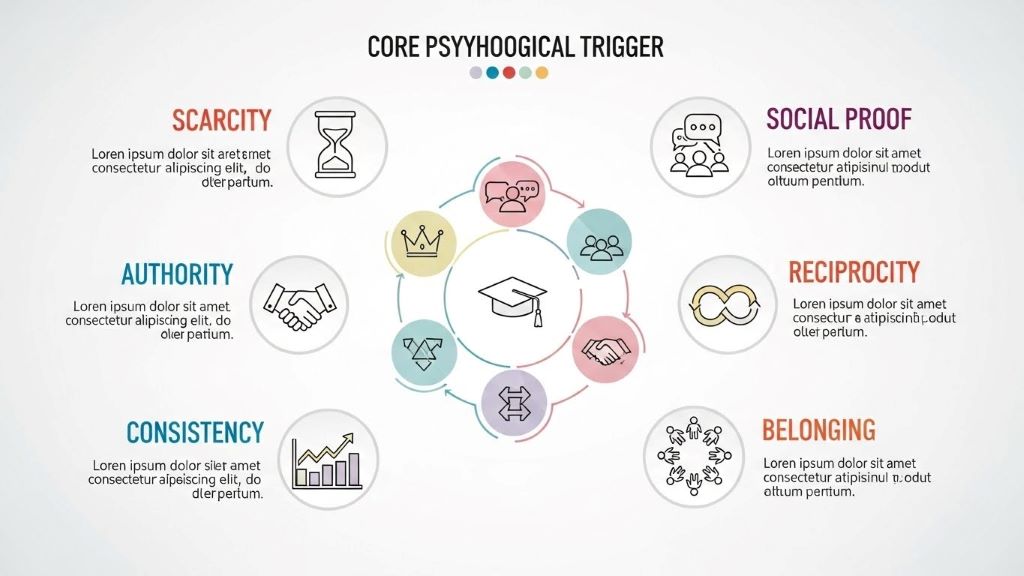
Several fundamental triggers prove consistently effective across digital platforms. Each trigger addresses specific emotional or cognitive needs.
Scarcity creates urgency by suggesting limited availability. People fear missing opportunities more than they desire gains. Phrases like limited time offer or only three remaining activate this powerful trigger.
Social proof leverages our tendency to follow others. Customer reviews, testimonials, and popularity indicators show that others trust your brand. Consequently, new visitors feel more confident making purchases.
Reciprocity compels people to return favors. Offering free content, trials, or valuable resources creates obligation. This trigger builds goodwill and increases conversion likelihood.
Authority establishes credibility through expertise or endorsements. Certifications, awards, and expert opinions signal trustworthiness. People naturally defer to perceived authorities in decision-making.
Consistency relies on our desire to align actions with previous commitments. Small initial commitments lead to larger ones. Email subscriptions often precede purchases for this reason.
Mapping Your Customer Journey
Effective trigger mapping requires understanding your customer’s path. Each stage presents different trigger opportunities.
The awareness stage introduces potential customers to your brand. Curiosity and novelty work well here. Educational content and surprising statistics capture attention effectively.
During the consideration stage, customers evaluate options. Social proof and authority triggers build confidence. Comparison content and expert endorsements prove valuable at this point.
The decision stage requires final motivation. Scarcity and reciprocity often convert hesitant prospects. Limited-time offers paired with guarantees reduce perceived risk.
Post-purchase stages matter equally. Consistency and belonging triggers encourage repeat business. Loyalty programs and community features strengthen ongoing relationships.
Map triggers to specific touchpoints throughout this journey. Different platforms and content types support different triggers naturally.
Identifying Triggers for Your Target Audience
Audience research reveals which triggers resonate most effectively. Demographics, psychographics, and behavioral data all provide insights.
Survey your existing customers about decision-making factors. Ask what convinced them to choose your brand. Their answers highlight effective triggers worth emphasizing.
Analyze competitor strategies to identify industry-standard triggers. Look at successful campaigns in your niche. However, avoid copying tactics without understanding why they work.
Test different triggers through A/B testing. Compare conversion rates across variations using different psychological approaches. Data reveals which triggers your specific audience prefers.
Consider cultural differences when targeting diverse audiences. Triggers that work in one culture might fail or offend in another. Research cultural values and communication preferences thoroughly.
Age groups respond differently to various triggers. Younger audiences often value social proof and belonging. Older demographics might prioritize authority and trust signals more heavily.
Creating a Trigger Map for Digital Channels
Each digital channel offers unique trigger implementation opportunities. Strategic mapping ensures consistent, effective use across platforms.
Website design incorporates multiple triggers simultaneously. Trust badges and security symbols activate authority and safety triggers. Limited inventory notifications create scarcity. Customer review sections provide social proof.
Email marketing allows personalized trigger sequences. Abandoned cart emails use reciprocity by offering discounts. Welcome series establish consistency through gradual engagement increases.
Social media platforms excel at social proof and belonging triggers. User-generated content shows real people enjoying products. Community engagement features foster belonging and identity.
Paid advertising requires immediate trigger impact. Ad copy must activate triggers within seconds. Scarcity and curiosity work particularly well in paid media formats.
Content marketing builds authority and reciprocity over time. Educational resources demonstrate expertise while providing value. This long-term approach strengthens brand relationships gradually.
Implementing Scarcity Triggers Effectively
Scarcity ranks among the most powerful marketing triggers. However, misuse damages credibility quickly.
Time-based scarcity sets clear deadlines for offers. Flash sales and countdown timers create genuine urgency. Ensure deadlines are real and honored consistently.
Quantity-based scarcity shows limited product availability. Stock counters and sold out notifications prove effectiveness. Never fake inventory levels, as customers notice inconsistencies.
Exclusive access creates scarcity through selectivity. VIP programs and early access opportunities make customers feel special. This approach combines scarcity with belonging triggers.
Seasonal scarcity aligns with natural cycles. Holiday promotions and seasonal products carry inherent time limitations. Customers understand and accept these natural constraints.
Avoid overusing scarcity triggers. Constant urgency loses effectiveness and appears manipulative. Reserve scarcity for genuinely limited situations.
Leveraging Social Proof Across Platforms
Social proof validates choices through others’ experiences. Multiple formats suit different contexts and platforms.
Customer reviews provide detailed feedback from real users. Display reviews prominently on product pages. Respond to reviews publicly to demonstrate engagement.
Testimonials offer curated positive experiences. Video testimonials prove particularly compelling. Feature diverse customers to appeal to various audience segments.
User counts and popularity metrics show scale. Numbers like trusted by 10,000 businesses signal widespread acceptance. Update these figures regularly to maintain accuracy.
Social media engagement demonstrates active community support. Share counts, likes, and comments all serve as proof. Encourage sharing through contests and engagement campaigns.
Expert endorsements carry significant weight in specialized fields. Industry leaders and influencers lend credibility. Choose endorsers whose values align with your brand.
According to Forbes, consumers trust peer recommendations and online reviews as much as personal recommendations. This makes social proof essential for online success.
Building Authority and Trust Signals
Authority triggers establish your brand as a reliable expert. Multiple elements combine to create strong authority positioning.
Credentials and certifications demonstrate verified expertise. Display relevant awards, certifications, and memberships prominently. Keep credentials current and legitimate.
Content quality reflects knowledge and professionalism. Well-researched articles, detailed guides, and thoughtful analysis all build authority. Grammar and presentation quality matter significantly.
Media mentions and press coverage validate your significance. Feature logos from publications that have mentioned your brand. Link to actual articles for verification.
Years in business signal stability and experience. Longevity suggests reliability and customer satisfaction. Highlight your history when it strengthens your position.
Professional partnerships indicate peer respect. Associations with respected brands transfer credibility. Choose partners carefully to protect your reputation.
Using Reciprocity to Build Relationships
Reciprocity creates positive feelings and future obligations. Strategic giving strengthens customer relationships effectively.
Free valuable content educates while building goodwill. Ebooks, guides, and templates provide genuine utility. Ensure free offerings match your paid product quality.
Free trials remove purchase barriers and demonstrate value. Limited-feature or time-limited trials work differently. Choose the approach matching your product type.
Unexpected bonuses surprise and delight customers. Extra resources or upgrades exceed expectations. Small unexpected gifts create disproportionate positive feelings.
Personalized assistance shows individual attention. Free consultations or custom recommendations demonstrate care. This personal touch builds strong emotional connections.
Educational resources position you as helpful rather than sales-focused. Webinars, tutorials, and workshops provide value first. Sales opportunities emerge naturally from this foundation.
Consistency and Commitment Strategies
Consistency triggers leverage our desire for self-alignment. Small initial commitments lead to larger actions over time.
Email subscription represents a low-risk first commitment. This small action opens the door for future engagement. Nurture subscribers gradually toward larger commitments.
Account creation increases investment in your platform. Saved preferences and purchase history create switching costs. Make account benefits clear and valuable.
Progressive profiling gathers information gradually. Each additional detail represents a small commitment. This approach feels less intrusive than lengthy forms.
Loyalty programs reward consistent behavior. Points and tiers motivate continued engagement. Structure programs to encourage increasingly valuable actions.
Content engagement ladders move audiences from passive to active. Reading progresses to commenting, then sharing, then creating. Design content that facilitates this progression.
Belonging and Identity Triggers
Belonging triggers tap into fundamental human social needs. People seek group membership and identity expression.
Brand communities create spaces for customer interaction. Forums, groups, and events foster connections. Facilitate but do not over-control these spaces.
Shared values and missions attract like-minded customers. Purpose-driven marketing resonates with value-conscious consumers. Authenticity matters more than perfection here.
Insider language and references signal membership. Industry terminology and cultural references create in-group feelings. Use these carefully to include rather than exclude.
User-generated content campaigns invite participation. Hashtags and challenges encourage creative contribution. Feature customer content prominently to reward participation.
Exclusive membership tiers create aspirational identity. Premium levels signal status and achievement. Balance exclusivity with accessibility appropriately.
Measuring Trigger Effectiveness
Data reveals which triggers drive results. Systematic measurement improves strategy over time.
Conversion rate changes show trigger impact on decisions. Compare periods before and after implementing specific triggers. Control for other variables when possible.
Engagement metrics indicate emotional resonance. Time on page, click-through rates, and social shares all signal interest. Higher engagement suggests effective trigger use.
Customer feedback provides qualitative insights. Surveys and interviews reveal perceived motivations. Ask customers what influenced their decisions directly.
A/B testing isolates individual trigger effects. Test one element at a time for clear results. Build a database of effective triggers for your audience.
Revenue attribution tracks financial impact. Connect specific triggers to sales and customer lifetime value. This demonstrates marketing ROI conclusively.
Ethical Considerations in Trigger Marketing
Psychological triggers carry ethical responsibilities. Misuse harms customers and damages long-term business success.
Transparency builds trust even when using triggers. Customers appreciate honesty about limitations and conditions. Never hide important information in fine print.
Authenticity ensures triggers reflect reality. Fake scarcity and false social proof eventually get exposed. Maintain genuine practices for sustainable success.
Respect customer autonomy throughout the process. Triggers should inform rather than manipulate. Provide enough information for informed decisions.
Cultural sensitivity prevents offensive or inappropriate trigger use. Research cultural norms and values thoroughly. When uncertain, consult cultural experts.
Regular ethical reviews keep practices aligned with values. Evaluate campaigns for manipulation versus persuasion. Adjust approaches that feel uncomfortable or deceptive.
Conclusion
Strategic psychological trigger mapping empowers marketers to create more effective campaigns. By understanding core triggers like scarcity, social proof, authority, reciprocity, consistency, and belonging, you can design customer journeys that resonate emotionally and drive action. Mapping these triggers to specific touchpoints across digital channels ensures consistent, powerful messaging. However, ethical implementation remains paramount for long-term success. When used authentically and transparently, psychological triggers build genuine customer relationships while achieving business objectives. Regular measurement and refinement help you identify which triggers work best for your unique audience and continuously improve your marketing effectiveness.
Frequently Asked Questions
What is the difference between psychological triggers and manipulation?
Psychological triggers inform and influence decisions by highlighting genuine value and benefits. Manipulation uses deception or pressure to force actions against someone’s best interest. Ethical trigger use respects customer autonomy and provides truthful information for informed decision-making.
Which psychological trigger is most effective for e-commerce?
Scarcity and social proof prove most effective for e-commerce conversions. Limited inventory notifications and customer reviews directly influence purchase decisions. However, the most effective trigger varies by product type, target audience, and competitive context.
How often should I update my psychological trigger map?
Review and update your trigger map quarterly or after major campaign launches. Customer preferences and competitive landscapes change over time. Regular testing and measurement reveal when triggers lose effectiveness and need refreshment.
Can psychological triggers work for B2B marketing?
Yes, psychological triggers work effectively in B2B contexts with appropriate adjustments. Authority and social proof prove particularly powerful for business buyers. Case studies, industry certifications, and peer references serve as strong B2B triggers.
How do I avoid overusing psychological triggers?
Balance trigger use with genuine value delivery and relationship building. Not every message needs urgency or scarcity. Focus on helping customers make informed decisions rather than maximizing short-term conversions through constant pressure.
Related Topics:
No Signal on Arzopa Monitor? Try These Simple Solutions
Low-Code and No-Code Development: What’s Next for Web Developers in 2025
About the Author