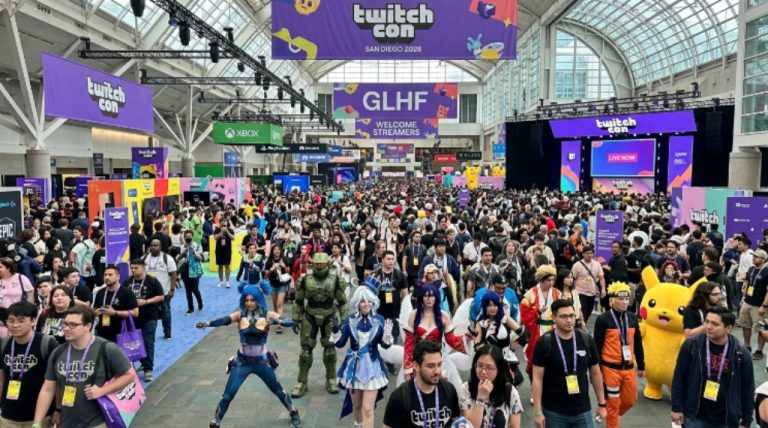
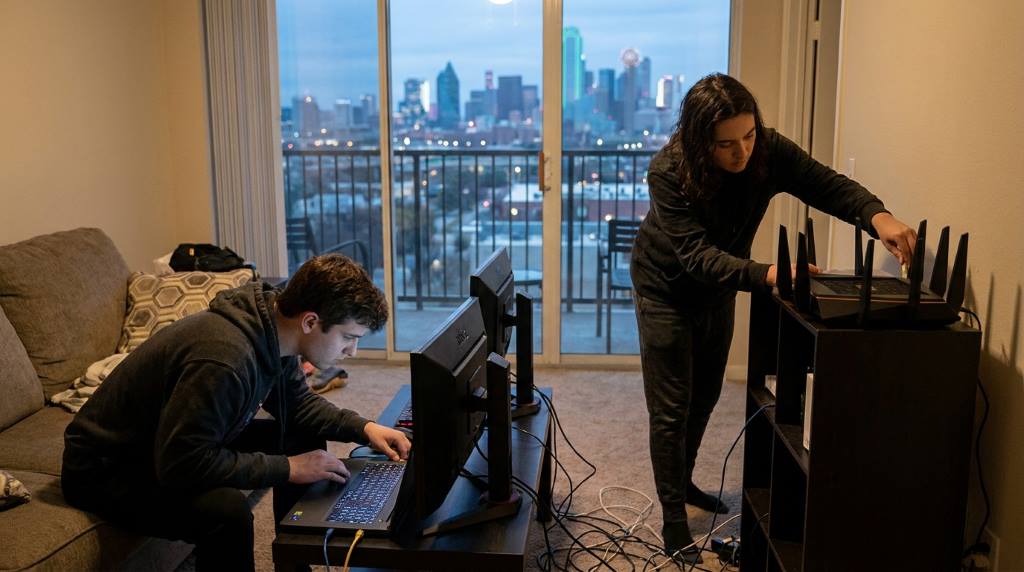
Online gaming continues to grow across Texas, and Dallas remains one of the busiest gaming hubs in the state. Recent reports show that more than 65% of multiplayer gamers experience lag during evening hours when internet traffic spikes. Many Dallas players now upgrade their home networks because even a 50-millisecond delay can ruin competitive matches. As a result, local gamers constantly search for better ways to improve connection stability and lower ping times. Some users even kick devices off wifi router systems to reduce bandwidth congestion during tournaments and ranked gameplay sessions.
Dallas gamers face unique internet challenges because the city combines dense neighborhoods, expanding suburbs, and heavy streaming traffic every evening. Furthermore, hot summer weather can affect networking hardware and create overheating issues that slow down performance. Competitive players often prepare their systems before peak hours begin around 6 PM. They optimize routers, monitor bandwidth, and use wired connections whenever possible. These small adjustments help gamers maintain smoother gameplay even when local internet demand increases.
Why Peak Hour Lag Hits Dallas Gamers Hard
Peak hour lag usually happens when too many users share the same local internet infrastructure at once. Dallas neighborhoods with large apartment complexes often experience the worst slowdowns because many households stream movies, attend video calls, and download files simultaneously. Consequently, gamers notice sudden ping spikes and packet loss during online matches. This problem becomes more visible in fast-paced games that require split-second reactions.
Several Dallas internet providers still rely on overloaded network nodes in high-demand areas. Therefore, even users with high-speed plans may experience unstable latency during the evening. Smart gamers now study protect using free wifi practices because secure network habits often improve device performance and reduce unnecessary background traffic. Many players also disable automatic cloud syncing during gaming hours. These simple changes help preserve bandwidth for online matches.
How Local Weather Affects Gaming Connections
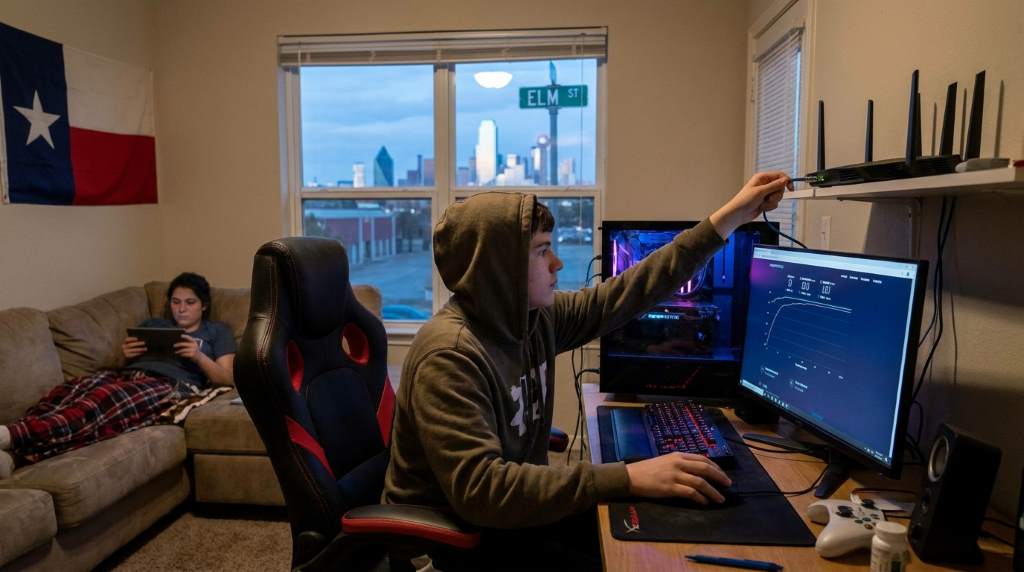
Dallas summers bring intense heat that can affect both routers and modems. When networking devices overheat, they often throttle performance or restart unexpectedly. As a result, gamers may disconnect during important matches or experience sudden lag spikes. Keeping equipment cool becomes an important part of stable gaming performance.
Many experienced players place routers in open spaces instead of enclosed entertainment cabinets. Additionally, some gamers use small USB cooling fans to maintain safe operating temperatures. This uncommon but effective method improves long-term router stability during extended gaming sessions. Local esports players often recommend checking device temperatures during summer tournaments.
Using Wired Connections Instead of WiFi
Dallas gamers who compete online usually prefer Ethernet connections over wireless networks. Wired connections provide lower latency, more stable speeds, and fewer signal interruptions. In contrast, WiFi signals often suffer interference from neighboring apartments and household electronics. Ethernet cables eliminate many of these common connection problems.
Players who cannot run long Ethernet cables often use powerline adapters as an alternative solution. These devices send internet signals through home electrical wiring and create a more reliable connection than standard WiFi. Consequently, many Dallas gamers living in older homes use this setup to reduce lag. The improvement becomes especially noticeable during evening congestion periods.
Best Ethernet Setup Tips
- Use Cat6 or Cat6a cables for modern gaming setups.
- Keep cables away from microwaves and large power adapters.
- Connect consoles directly to the router instead of using extenders.
- Restart networking hardware weekly for better stability.
- Update router firmware regularly for performance improvements.
Optimizing Router Settings for Gaming
Many gamers ignore router settings even though they heavily influence gaming performance. Dallas players often reduce lag by enabling Quality of Service settings, commonly known as QoS. This feature prioritizes gaming traffic over streaming and downloads. Consequently, online matches receive faster network response times.
Some advanced users also manually adjust channel settings to avoid crowded wireless frequencies. Apartment complexes in Dallas frequently suffer channel overlap because dozens of routers operate close together. Players who learn why restaurants use wireless communication systems often discover how efficient frequency management reduces signal interference. Choosing less crowded channels can noticeably improve wireless gaming stability.
Router Features That Help Reduce Lag
- QoS traffic prioritization
- Dual-band or tri-band support
- Gaming mode optimization
- MU-MIMO technology
- Beamforming support
Modern gaming routers also include real-time traffic monitoring tools. These tools help players identify which devices consume the most bandwidth during gaming sessions. Therefore, households can limit streaming quality or pause large downloads while gaming occurs. This proactive management reduces unnecessary congestion.
Choosing the Best Internet Plan for Gaming
Internet speed alone does not guarantee better gaming performance. Many Dallas gamers mistakenly purchase extremely high download speeds while ignoring latency and upload quality. Competitive gaming depends more on stable ping than massive bandwidth. Therefore, fiber internet connections often outperform slower cable infrastructure.
Gamers should also review data caps before choosing an internet provider. Large game updates regularly exceed 50 GB, and streaming gameplay increases monthly usage significantly. Furthermore, cloud gaming platforms consume even more bandwidth than traditional downloads. Dallas gamers who stream on platforms like Twitch usually require higher upload speeds for stable broadcasts.
Questions Gamers Should Ask Internet Providers
- Does the plan include unlimited data?
- What is the average evening latency?
- Is fiber available in the neighborhood?
- Does the provider throttle gaming traffic?
- Are there modem rental fees?
Managing Household Bandwidth During Gaming Hours
Many Dallas households now contain dozens of connected devices. Smart TVs, tablets, security cameras, and streaming boxes constantly use internet bandwidth in the background. Consequently, gaming performance can suffer even when nobody notices network activity. Smart bandwidth management becomes essential during peak evening hours.
Experienced gamers schedule large downloads overnight instead of during gameplay sessions. Additionally, some players create separate guest networks for non-gaming devices. This setup helps isolate gaming traffic and prevents bandwidth competition. Families with multiple gamers often benefit greatly from these adjustments.
Reducing Hidden Bandwidth Usage
- Disable automatic software updates during gaming hours.
- Pause cloud backup applications temporarily.
- Lower streaming quality from 4K to HD.
- Disconnect inactive smart devices.
- Limit simultaneous video calls when possible.
How Dallas Esports Players Prepare for Competitive Matches
Professional and semi-professional gamers in Dallas follow strict preparation routines before tournaments begin. Many restart their routers and modems one hour before important matches. This process clears temporary network errors and refreshes connections. As a result, they often experience fewer unexpected disruptions.
Some local esports teams also test server regions before competitions. Certain game servers provide better routing paths depending on Dallas network conditions. Therefore, players may select nearby regions with lower congestion even if the physical distance appears slightly longer. This uncommon strategy sometimes reduces ping by several milliseconds.
Using Gaming VPNs Carefully
Gaming VPNs remain controversial among competitive players because results vary by provider and location. However, some Dallas gamers successfully lower latency by bypassing congested ISP routing paths. The improvement depends heavily on the VPN server location and network quality. Players should always test performance before relying on a VPN during tournaments.
Reliable VPN services can also reduce packet loss during overloaded network periods. Nevertheless, poor VPN providers may increase lag instead of improving it. Dallas gamers should avoid free VPN services because they usually introduce unstable routing and slower speeds. Premium gaming-focused services often deliver more consistent performance.
Preventing Hardware Bottlenecks Inside the Home
Network lag does not always originate from the internet provider. Sometimes older routers, outdated modems, or damaged cables create hidden bottlenecks inside the home. Dallas gamers frequently upgrade gaming PCs while ignoring aging networking equipment. Consequently, they continue experiencing connection instability despite having fast internet plans.
Modern WiFi 6 and WiFi 6E routers handle heavy traffic more efficiently than older hardware. Additionally, newer devices support better signal management and reduced latency. Competitive players who upgraded networking hardware often reported smoother gameplay during busy evening hours. Investing in quality equipment can provide long-term performance improvements.
Signs Your Router Needs Replacement
- Frequent random disconnects
- Overheating during normal use
- Slow speeds despite fast internet plans
- Weak signal in nearby rooms
- Inconsistent gaming latency
Why Dallas Gamers Monitor Ping Instead of Speed
Many casual users focus only on download speed because internet advertisements emphasize large numbers. However, competitive gamers prioritize latency, jitter, and packet stability instead. A stable 25 Mbps connection often performs better for gaming than an unstable 500 Mbps plan. Dallas esports communities increasingly educate new players about this difference.
Gamers commonly use ping monitoring tools before major gaming sessions. These applications track latency fluctuations and reveal network instability patterns throughout the day. Consequently, players can identify the best hours for ranked gameplay. Some Dallas streamers even maintain detailed connection logs to study ISP performance trends.
Building a Long-Term Lag Reduction Strategy
Reducing network lag requires consistent maintenance instead of one-time adjustments. Dallas gamers who achieve stable performance usually combine several optimization techniques together. They maintain updated firmware, manage household traffic, and monitor hardware temperatures regularly. This layered approach creates more reliable online gaming experiences.
Many experienced players also learn enter router configure internet settings to customize their networks more effectively. Understanding router controls helps users prioritize gaming traffic and improve signal efficiency. Small technical improvements often create noticeable gaming benefits over time. Consistent optimization matters more than expensive upgrades alone.
Conclusion
Gamers in Dallas, TX continue finding smarter ways to reduce network lag during peak internet hours. They combine wired connections, optimized router settings, careful bandwidth management, and upgraded hardware to improve online performance. Furthermore, local climate awareness and ISP monitoring help maintain stable gaming sessions throughout the year. Players who consistently apply these strategies usually enjoy smoother matches and lower latency.
If you want better gaming performance in Dallas, start by testing your current network setup today. Upgrade weak hardware, reduce unnecessary traffic, and prioritize gaming connections during busy evening periods. Even small changes can dramatically improve online gameplay stability. Competitive gaming becomes far more enjoyable when your network performs reliably every night.
FAQs
What causes gaming lag during peak hours in Dallas?
Heavy neighborhood internet traffic and overloaded ISP infrastructure usually create evening gaming lag.
Does Ethernet reduce gaming lag better than WiFi?
Yes, Ethernet connections provide more stable speeds and lower latency than wireless networks.
Can hot Dallas weather affect my router performance?
Yes, excessive heat can overheat networking equipment and cause slower or unstable connections.
Should gamers use QoS settings on routers?
Yes, QoS prioritizes gaming traffic and helps reduce lag during heavy network usage.
Do gaming VPNs always improve ping?
No, VPN performance depends on routing quality and may either improve or worsen latency.
About the Author