
The headphone industry banks on one consumer behavior: people equating highest price with best performance. But the best noise cancelling headphones in 2025 don’t always carry the biggest price tags — and the most expensive models often include premium features you’ll never touch. The real cost of overpaying isn’t just the extra $100–$200 upfront. It’s buying capabilities designed for someone else’s listening habits while ignoring what actually improves your daily audio experience.
Best noise cancelling headphones deliver effective active noise cancellation, comfortable extended wear, reliable battery life exceeding 20 hours, and clear audio reproduction — at a price point where performance gains per dollar haven’t yet plateaued. That sweet spot currently sits between $250 and $380 for most buyers.
If you’re hunting for Bose QuietComfort deals or trying to figure out where the price-to-performance curve flattens, this guide maps exactly where your money delivers genuine improvement versus where it just funds brand premium and marketing budgets.
What Price Range Delivers the Best Noise Cancellation Value?
The $250–$380 range delivers the best value for noise cancelling headphones. Below this, ANC quality drops noticeably. Above this, you’re paying for incremental luxury features — not meaningfully better noise cancellation.
Here’s how performance scales with price based on independent lab testing and user satisfaction data:
| Price Range | ANC Quality | What You Get | What You Miss |
|---|---|---|---|
| Under $100 | Basic — blocks steady hums only | Bluetooth connectivity, basic padded design | Effective ANC, good battery, comfort for long wear |
| $100–$200 | Moderate — handles commute noise partially | Decent ANC, 15–20hr battery, companion app | Adaptive ANC, premium comfort, strong voice blocking |
| $250–$380 | Excellent — industry-leading performance | Adaptive ANC, 24–30hr battery, premium materials, full app control | Luxury materials (titanium, alcantara), spatial audio |
| $400–$550 | Excellent — marginal improvement over $350 tier | Premium build, spatial audio, brand prestige | Nothing functional — diminishing returns territory |
The jump from $150 to $300 delivers massive ANC improvement. The jump from $300 to $500 delivers a nicer unboxing experience and bragging rights. Your ears can’t tell the difference at a frequency cancellation level.
What Are the Best Noise Cancelling Headphones That Don’t Overprice Their ANC?
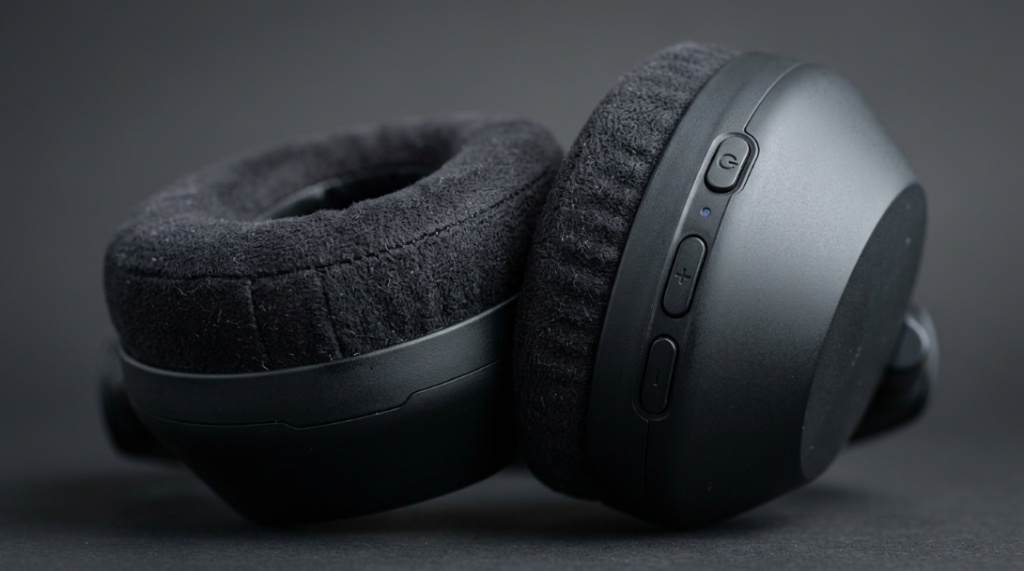
The Bose QuietComfort, Sony WH-1000XM5, and Sennheiser Momentum 4 deliver flagship-tier noise cancellation without crossing into luxury pricing territory. All three sit in the $280–$380 range at standard retail.
Top value picks broken down:
- Bose QuietComfort Headphones ($349): Best low-frequency ANC, lightest clamping force, 24-hour battery with ANC. The standard QuietComfort (non-Ultra) offers 90% of the Ultra’s performance at $80 less.
- Sony WH-1000XM5 ($299–$349): Best all-around package with 30-hour battery, superior voice call quality, and the most customizable ANC via app.
- Sennheiser Momentum 4 ($299–$349): Best sound quality in the tier with 60-hour battery life. ANC slightly below Bose/Sony but audiophile-grade tuning.
For Bose QuietComfort deals specifically, the non-Ultra QuietComfort model frequently drops to $279 during sales events and delivers the same core ANC engine that made Bose famous in noise cancellation. Check the current Bose QuietComfort pricing and models for updated deal tracking.
How Do You Identify Overpriced Features You Won’t Use?
Features that add cost without improving noise cancellation or daily usability include spatial audio, premium chassis materials, head-tracking sensors, and brand-exclusive codec support you’ll never activate.
Common premium features that inflate price without matching value:
- Spatial Audio / Head Tracking: Sounds impressive in demos but most users disable it within a week. Adds $50–$100 to price. Useful only for movie watching on tablets.
- Titanium or aluminum construction: Looks premium, adds weight without improving ANC. Plastic composites in the $300 tier are equally durable with better weight distribution.
- Ultra-premium codecs (aptX Lossless): Requires specific source hardware most people don’t own. Standard AAC and LDAC satisfy 98% of listeners.
- Touch surface controls vs. physical buttons: Touch controls cost more to engineer and frequently misfire. Physical buttons remain more reliable for ANC toggling.
Ask yourself: “Would I pay $80 extra specifically for this single feature?” If the answer is no for each premium addition, you’re in overpaying territory.
When Do Bose QuietComfort Deals Actually Save Money?
Genuine Bose QuietComfort deals appear during Amazon Prime Day (July), Black Friday, and when new models launch — typically dropping prices 15–30% on current or previous generation models.
Deal timing calendar:
- January–February: Post-holiday clearance, 10–15% off previous-gen models
- July (Prime Day): 20–25% off current models, 30–40% off previous generation
- September–October: New model launches push predecessor prices down permanently
- November (Black Friday/Cyber Monday): Best deals of the year — 25–35% off current generation
Certified refurbished through Bose’s official store offers year-round savings of 20–30% with full warranty coverage. This is the most reliable way to get premium ANC headphones without waiting for seasonal sales.
How Can You Tell If a “Sale” Price Is Actually a Good Deal?
Use price tracking tools like CamelCamelCamel (Amazon) or Honey to check historical pricing. A genuine deal is 15%+ below the 90-day average price — anything less is likely a manipulated “sale” from an inflated list price.
Red flags for fake deals:
- “Was $599, now $349” — if it was never actually sold at $599 consistently, the discount is fictional
- Third-party sellers on Amazon offering 50%+ off — often counterfeit or grey market units without warranty
- “Limited time” deals that have been running for months — check the price history
Real savings come from authorized retailers: Bose.com, Amazon (sold by Amazon, not third-party), Best Buy, and Costco. These guarantee authentic products with valid manufacturer warranties.
When shopping around, it is easy to get caught up solely on decibel reduction stats and completely overlook ergonomics. Finding the right fit ensures you can wear your gear for hours without ear fatigue. To make sure you don’t make a painful mistake during your search, you should learn how to Avoid Buying Uncomfortable Sleep Headphones, as clamping force and headband cushioning matter just as much during the day as they do at night.
Is Buying Previous-Generation Headphones a Smart Move?
Yes — if the generational improvement is incremental. The Bose QuietComfort 45 (previous gen) delivers 85–90% of the newer model’s ANC performance at 40–50% lower prices. Generational leaps in ANC tech are small in 2025.
When previous-gen makes sense:
- The newer model’s improvements are cosmetic or feature additions you won’t use
- Price difference exceeds $100 for marginal ANC improvement
- The previous-gen model still receives firmware updates and app support
When previous-gen is risky:
- The model is 3+ generations old (battery degradation risk in retail stock)
- The manufacturer has discontinued app support or firmware updates
- Replacement parts (ear cushions, cables) are no longer available
What Budget-Friendly Alternatives Offer Decent Noise Cancellation?
The Sony WH-1000XM4 (previous gen, ~$199), Jabra Elite 85h (~$179), and Anker Soundcore Space Q45 (~$149) provide respectable ANC at significantly lower price points than flagship models.
Budget alternatives ranked by ANC effectiveness:
- Sony WH-1000XM4 ($199–$229): Previous flagship with proven ANC. Still outperforms most current mid-range competitors. Best budget pick overall.
- Jabra Elite 85h ($149–$179): SmartSound auto-adjusts ANC based on environment. Excellent call quality with 36-hour battery.
- Anker Soundcore Space Q45 ($129–$149): Best ANC under $150. Surprisingly effective noise cancellation for the price with 50-hour battery life.
These won’t match Bose or Sony’s current flagship ANC precision, but they handle 70–80% of noise cancellation tasks capably at half the price.
How Do You Calculate the True Cost Per Year of Headphone Ownership?
Divide the purchase price by expected lifespan in years, then add replacement ear cushions ($35 every 2 years). A $349 Bose QuietComfort lasting 4 years costs roughly $105/year — less than $9/month for daily premium noise cancellation.
True cost calculation:
- Purchase price: $349
- Ear cushion replacements (2 sets over 4 years): $70
- Total 4-year cost: $419
- Annual cost: $105
- Monthly cost: $8.73
- Daily cost: $0.29
Compared to cheaper $149 headphones that last 2 years before battery degradation makes them unusable, the cost difference per year narrows significantly. Premium headphones often deliver better long-term value through superior build quality and replaceable components.
Conclusion
Overpaying for noise cancelling headphones means spending beyond the $250–$380 sweet spot where ANC performance plateaus. Below this range, you sacrifice meaningful cancellation quality. Above it, you’re buying luxury features, not better silence. Focus on the three metrics that matter — ANC effectiveness, battery life with ANC active, and comfort for your head shape — and let everything else be a bonus, not a requirement.
Ready to find the right model at the right price? Explore Bose QuietComfort headphones with current pricing to compare models within the value sweet spot.
Found a deal that seems too good? Share it in the comments — the community can help verify if it’s legitimate before you commit.
Frequently Asked Questions
Are $100 noise cancelling headphones worth buying?
For basic noise reduction during casual use, yes. For effective cancellation of commute noise, office chatter, or airplane engines, no. Sub-$100 ANC headphones typically reduce ambient noise by only 40–50% compared to 75–90% from premium models in the $250–$380 range.
How much do Bose QuietComfort headphones cost on sale?
The standard Bose QuietComfort typically drops to $249–$279 during major sales events (Prime Day, Black Friday). The QuietComfort Ultra reaches $329–$359. Certified refurbished models are available year-round at $249–$299 through Bose’s official store with full warranty.
Is it better to buy headphones online or in-store?
Buy in-store for comfort testing, then price-match online if cheaper. Many retailers (Best Buy, Target) match Amazon pricing. This gives you hands-on fit testing with online deal pricing — the best of both approaches.
Do noise cancelling headphones lose effectiveness over time?
The ANC electronics don’t degrade, but battery capacity decreases over time (20% loss after 2–3 years of daily charging). Worn ear cushions that no longer seal properly also reduce passive isolation, which weakens perceived ANC performance. Replacing cushions restores most of the original experience.
What’s the cheapest headphone with genuinely good noise cancellation?
The Anker Soundcore Space Q45 at $129–$149 delivers the best ANC-to-price ratio in the budget category. It won’t match Bose or Sony flagships, but it cancels 65–70% of ambient noise effectively — enough for most commuting and office scenarios.
Should I wait for newer models or buy current headphones now?
Buy now if you need them now. ANC improvements between generations are incremental (5–10% better). Waiting 6+ months for a marginally better model means 6 months without the noise cancellation you need daily. The exception: if a new model launches within 30 days, wait for the price drop on the current generation.
Are refurbished noise cancelling headphones reliable?
From authorized sellers (Bose certified refurbished, Amazon Renewed with 90-day guarantee), yes. They undergo inspection, repair, and testing. Avoid third-party refurbished without warranty coverage — battery health and ANC component integrity cannot be verified without professional testing.
About the Author